KEITH HUNTER
ARCHITECT
Planning & Design for Custom Homes

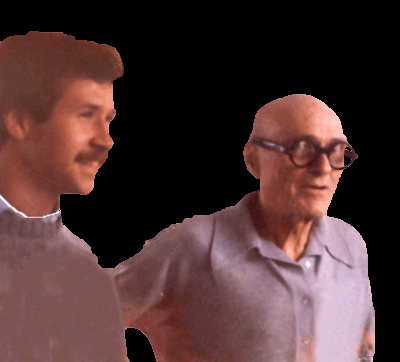
with Philip Johnson
in the "Glass House" circa 1979

I founded **Keith Hunter & Associates, Architect** in 1986 after having the privilege of working with and learning from some of America’s finest architects, including Philip Johnson. Since then, I’ve had the chance to work on just about every type of project you can imagine—from the **52-story United Bank Center in Denver, Colorado**, which featured the world’s largest glass-enclosed Winter Garden at the time, to a simple but thoughtfully designed **garden shed in Ashland, Virginia**. Along the way I’ve designed **over one hundred homes**—new builds, renovations, additions, and outbuildings—as well as medical facilities, performing arts spaces, and commercial projects.
No matter the size or complexity, I approach every project with the same mindset: listen carefully, balance creativity with practicality, and design something that works beautifully for the people who will use it. Lessons learned on one job always carry into the next. For example, my work on the **acoustics of Wolf Trap Performing Arts Center** gave me a deeper understanding of sound, which I’ve been able to apply in everything from performance halls to private homes.
In addition to being an architect, I’m a **Class “A” Licensed General Contractor** and President of **England Street Construction**. Building gives me a hands-on perspective of what really happens on the jobsite—what helps projects run smoothly, stay on budget, and achieve the highest level of craftsmanship.
I’m also a passionate **furniture designer and maker**. My wood and metal shop is where I experiment with materials, finishes, and joinery—insights that flow back into the way I detail buildings.
Most importantly, I have deep respect for the craftsmen and tradespeople who bring these ideas to life. As I often say, *“You can learn something from just about everyone on the jobsite if you take the time to listen and talk things through.”* That ongoing exchange is one of the most rewarding parts of what I do.